Blog

From the Center: Ceramic Art and Patronage In India

From the Center: Ceramic Art and Patronage In India

Kristine Michael
New Delhi, 2010

From the ancient world onward, patronage of the arts was important in art history. From pre-modern Medieval and Renaissance Europe, as well as feudal Japan, Southeast Asia and elsewhere art patronage tended to arise wherever a royal or religious system and aristocracy dominated a society and controlled resources.

Patrons operated as sponsors of artists and the commissioning of artwork which includes architecture, is the best-known aspect of the patronage system. Other disciplines also benefitted from patronage including those who studied natural philosophy (pre-modern science), musicians, writers, philosophers, alchemists, astrologers. Artists and musicians, as diverse and important as Mozart and Beethoven, Leonardo da Vinci and Michelangelo, William Shakespeare, and Ben Johnson all sought and enjoyed the support of noble or ecclesiastical patrons. It was only with the rise of bourgeois and capitalist social forms in the 19th century that European culture moved away from its patronage system to the more publicly-supported system of art colleges and universities, connoisseurs and galleries, museums, theaters, mass audiences and mass consumption that is familiar in the contemporary world. Though the nature of the sponsors has changed- -from churches to charitable foundations, and from aristocrats to plutocrats and collectors-the term patronage now simply refers to a symbiotic relationship with an artist where support happens in a multitude of ways that are surprisingly influential in the growth and progression of a specific style or medium, such as ceramic art.

Galleries and private or state-run Centers such as the Garth Clark Gallery in New York and the European Ceramic Work Center in Holland have revolutionized the stature and influenced the direction of ceramic art in the 20th century. They have created Centers of excellence which challenge creative boundaries.

One such Center was inspired by the Dutch model in Baroda over ten years ago and nurtured along by a visionary group of artists and collectors including Bhupen Khakhar, Jyoti and Reshma Patel, Jyotsna and Jyoti Bhatt among others. Khakhar was one of the first Indian painters to have experienced a residency at the EKWC, followed in later years by Sheila Makhijani, Mrinalini Mukherjee, C Douglas, Nikhileswar Baruah among others. He returned to India with enthusiasm for the possibilties of the medium and a commitment o see similar state of the art facilities in Baroda. At the time, support ior ceramic art was regionally divided with workshop and studios at the Bharat Bhawan, Bhopal and the Lalit Kala Akademy artists’ studios in New Delhi Chennai, Lucknow and Kolkata besides private art centers like the Sanskriti Kendra in Delhi. Baroda has over. the past fifty years been known as an artistic hub of education, experimentation and excellence and it was this very stimulating environment which encouraged the beginnings of the Light Publications dedicated vision of a ceramic center for the use of both ceramic and fine art practitioners.

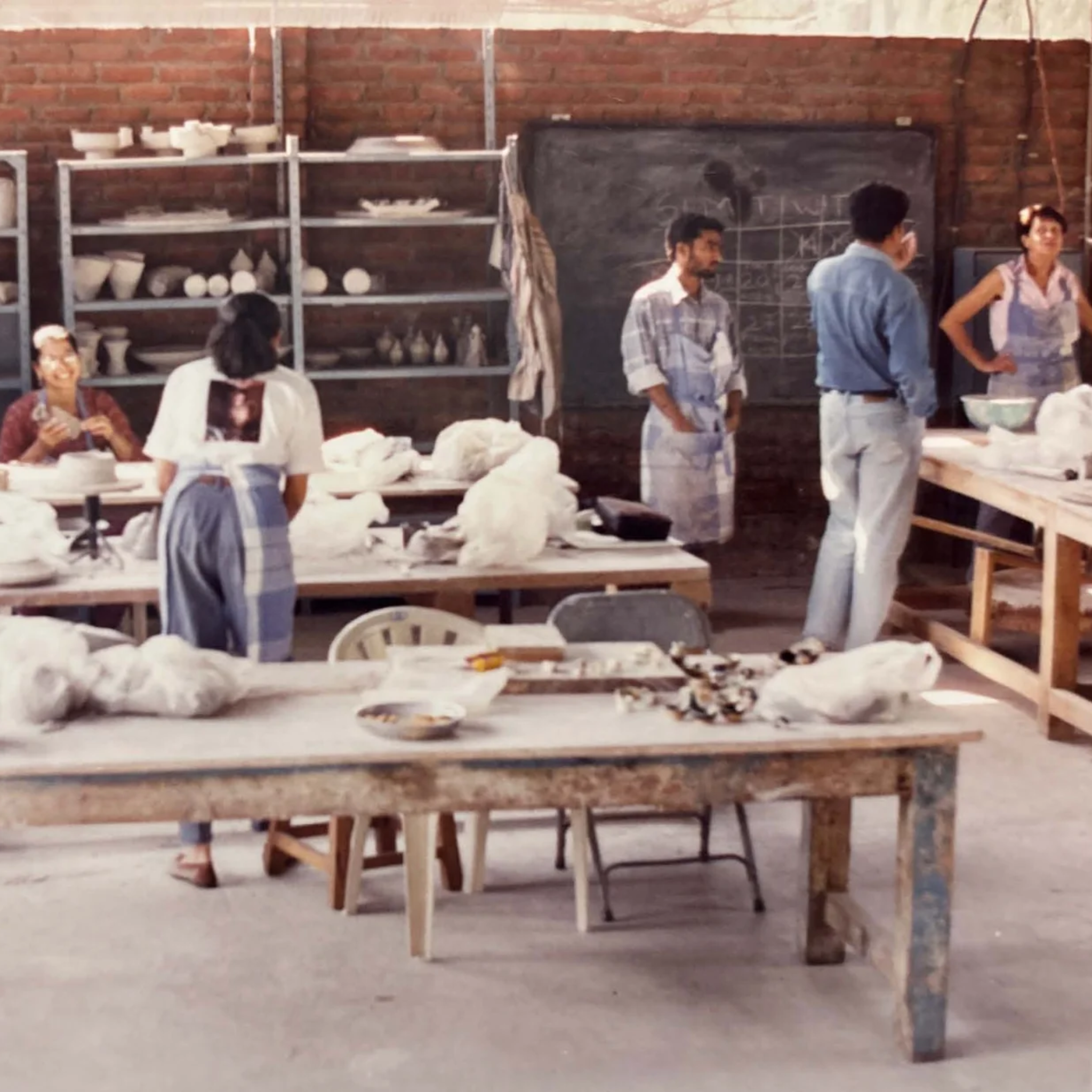
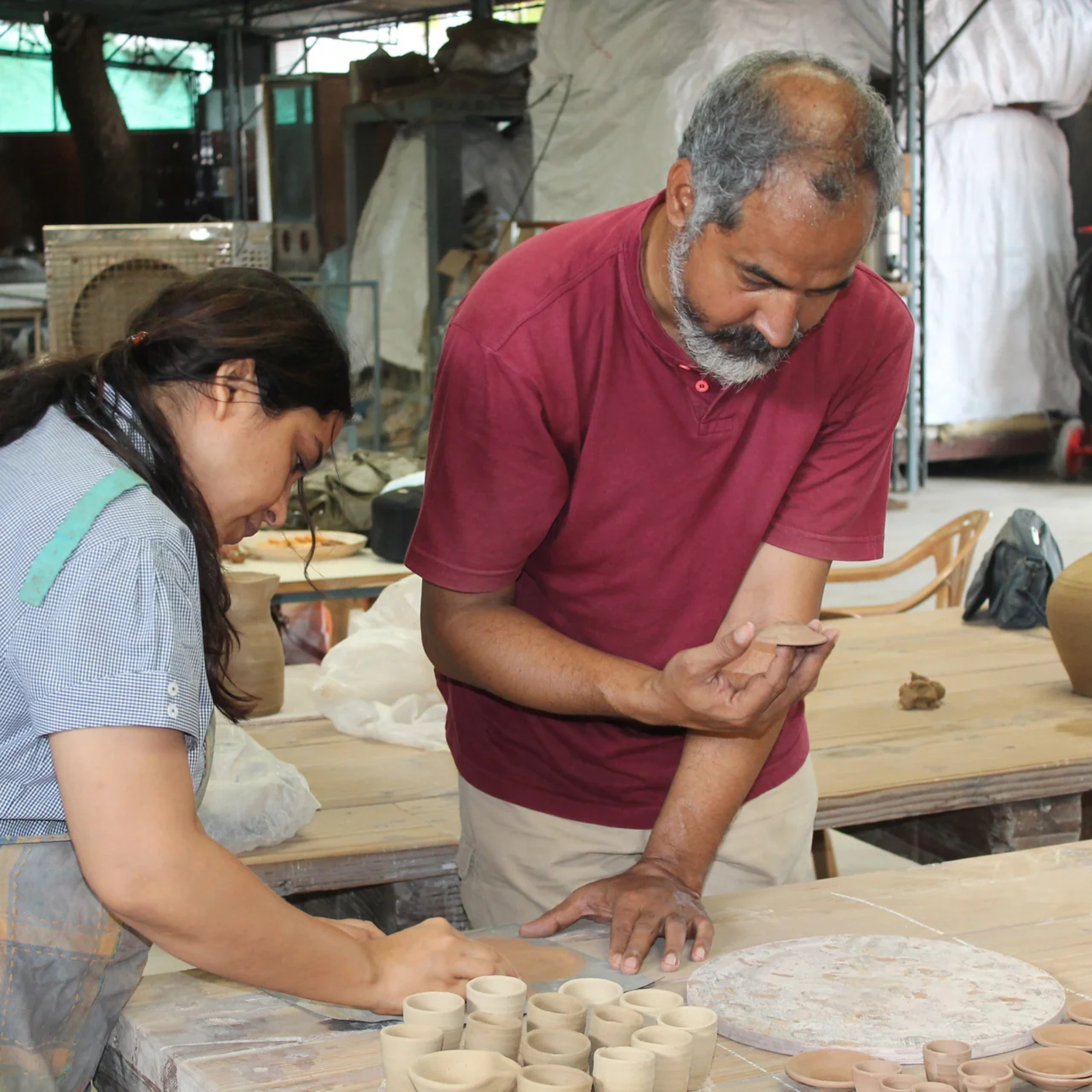
The large shed was erected in the middle of the most beautiful garden in the Light Publications premises that created a wonderful ambience of being close to nature as well as inspirational. Senior artists Ira Choudhuri and Nirmala Patwardhan visited as early consultants. The first kilns in 1998 were an electric car kiln, a test gas kiln designed by PR Daroz and an Olsen down draft wood kiln modified for Indian conditions by Ray Meeker of the Golden Bridge Pottery Pondicherry. It was built by Kristine Michael and Jyotsna Bhatt along with masons and was followed by the Salt wood kiln. The first of the many artist workshops which became the Center’s tour de force, included a combination of participants from the very experienced to the emerging in a creative environment that concentrated on creative interaction and often on a specific medium skills and techniques within the field of ceramics. The Paper Clay and Raku workshop conducted by Kristine Michael in 1998 set the pattern of learning and sharing between senior and emerging artists.

In 2000, there was an International Artists Camp led by Varsha Nair which culminated in an exhibition. This was followed the next year with a National Ceramic Artists Camp which reads like a who’s who of the Indian ceramic art world- Madhvi Subramanyam, Leena Batra, Trupti Patel, Shantanu Jena, Jayanti Naik, Ira Choudhary, Nirmala Patwardhan among others. Many students from the National Institute of Design and the MS University were welcomed as the policy was all inclusive at every step of the way. Young local artists such as Sukhdev Rathore, Nehal Rachh, Zaida Jacob, Panthini Thakkar, Vinod Daroz, Falguni B Sanghvi, Mudita Bhandari, and Sanket Patel, Prithvi Raj Singh Deo and Foram Thakore took on administrative responsibilities along side experimenting on their individual style. Some longer term residencies were offered to artists to do a larger body of work. The Lustre Workshop in 2010 conducted by Neha Goswami along the lines of Sandeep Manchekar’s Delhi Luster workshop brought a new group of emerging artists to the fore – Chirayu Sinha, Hina Bhatt and Anju Pawar. Other artists like Niharika Dave, Yogesh Mahida, Vishva Shroff and Rai David represented in this show form a growing number of artists in Vadodara.

Every workshop had a collective sharing of works created at the Center where it felt as though all of Baroda had congregated to discuss, interpret and critique in a positive and friendly manner. The Center encouraged visiting senior artists like Kalindi Jena to hold master sessions in specific techniques like brush work decoration. This was made even more special as one was able to see the warm interaction between contemporary legends like KG Subramanyam and Jena. A true learning experience which goes into the annals of a shared history which keeps the Ceramic Center in its midst.

The next decade will see the further growth of ceramics as a creative medium in installation, architectural and public art, as well as the functional, domestic and sculptural arenas where the positive contribution of support from Centers of patronage like the Ceramic Center at Light Publications, will be more than evident.
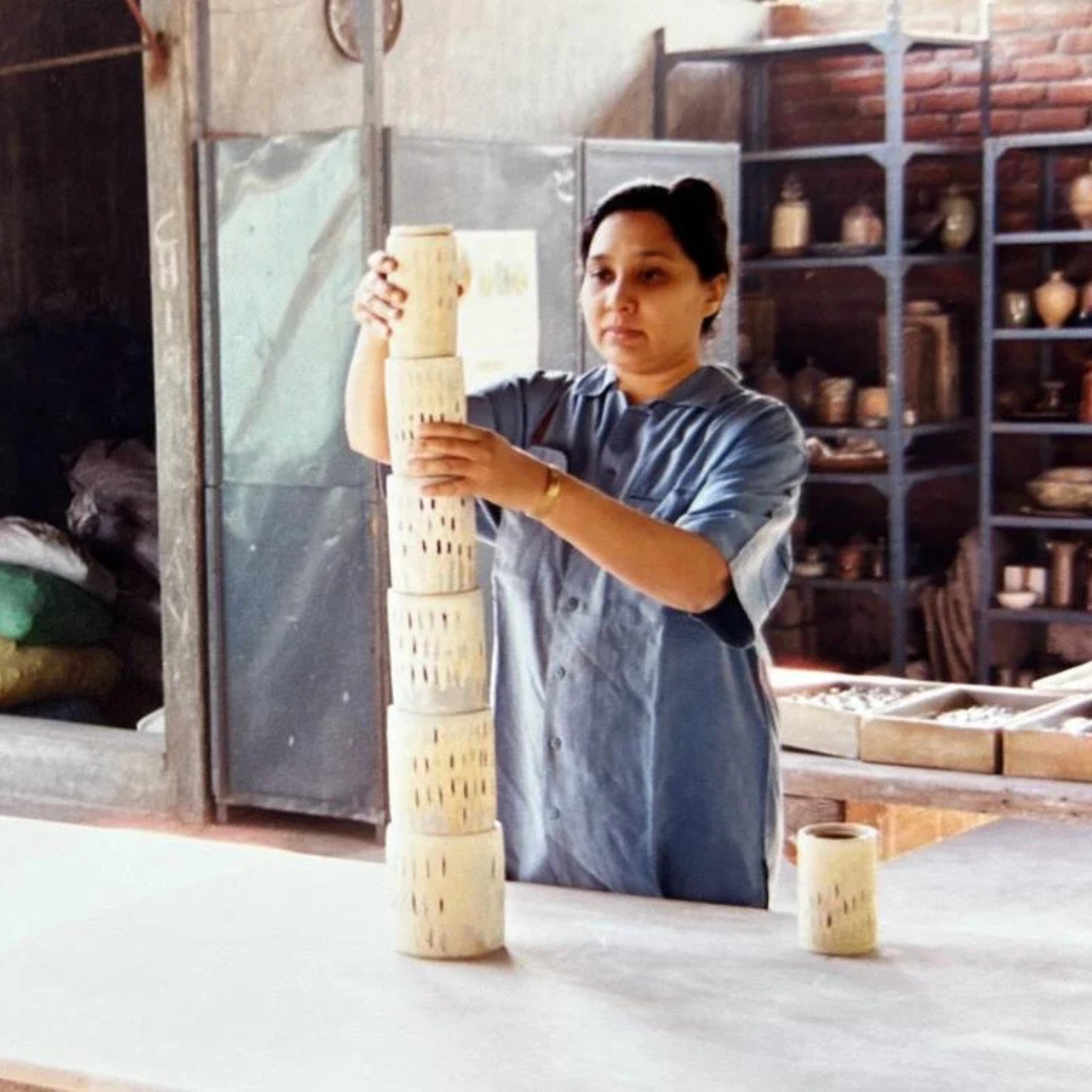
Article on Jyotsna Bhatt in The Mumbai Mirror

Article on Jyotsna Bhatt in The Mumbai Mirror

Rekha Rodwittiya

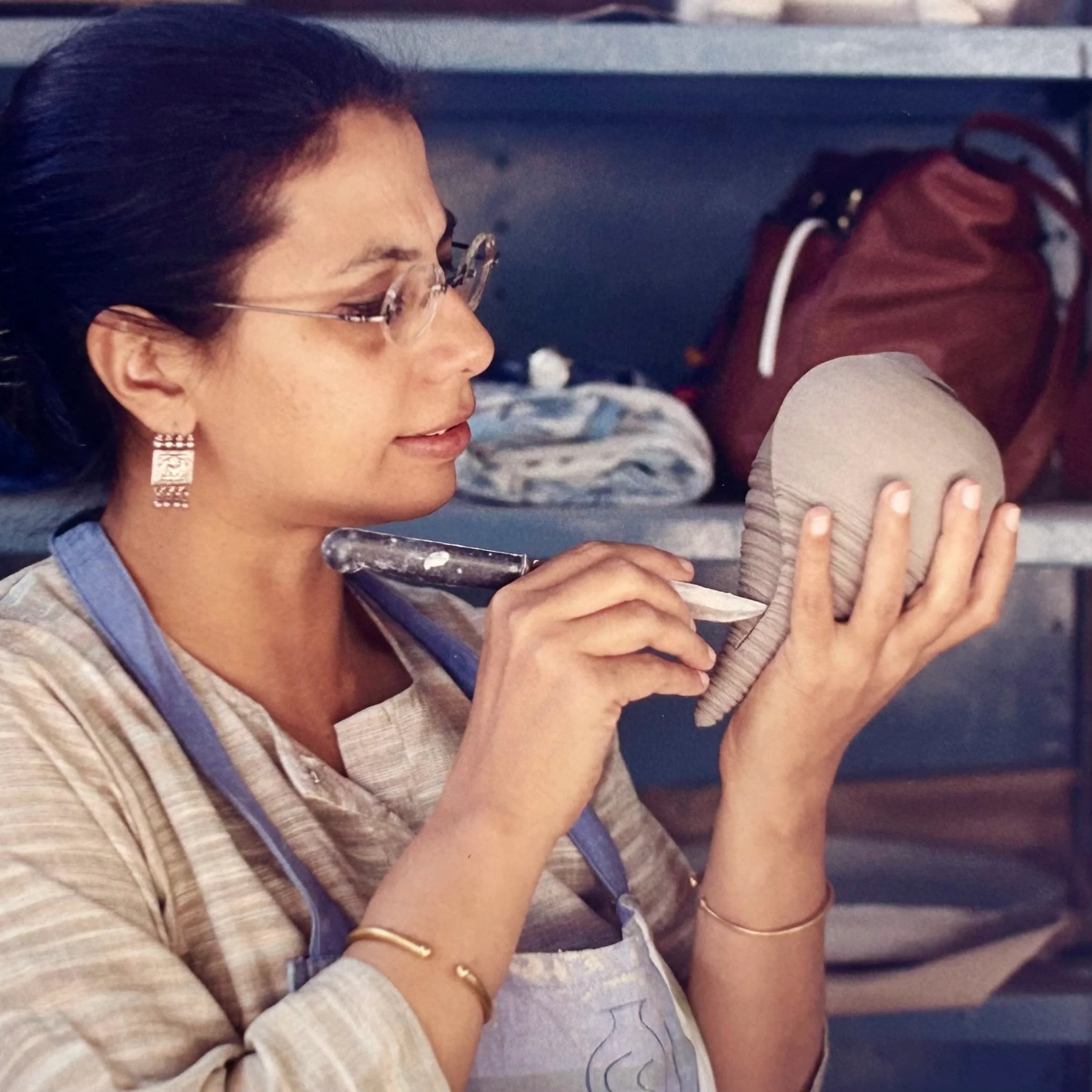
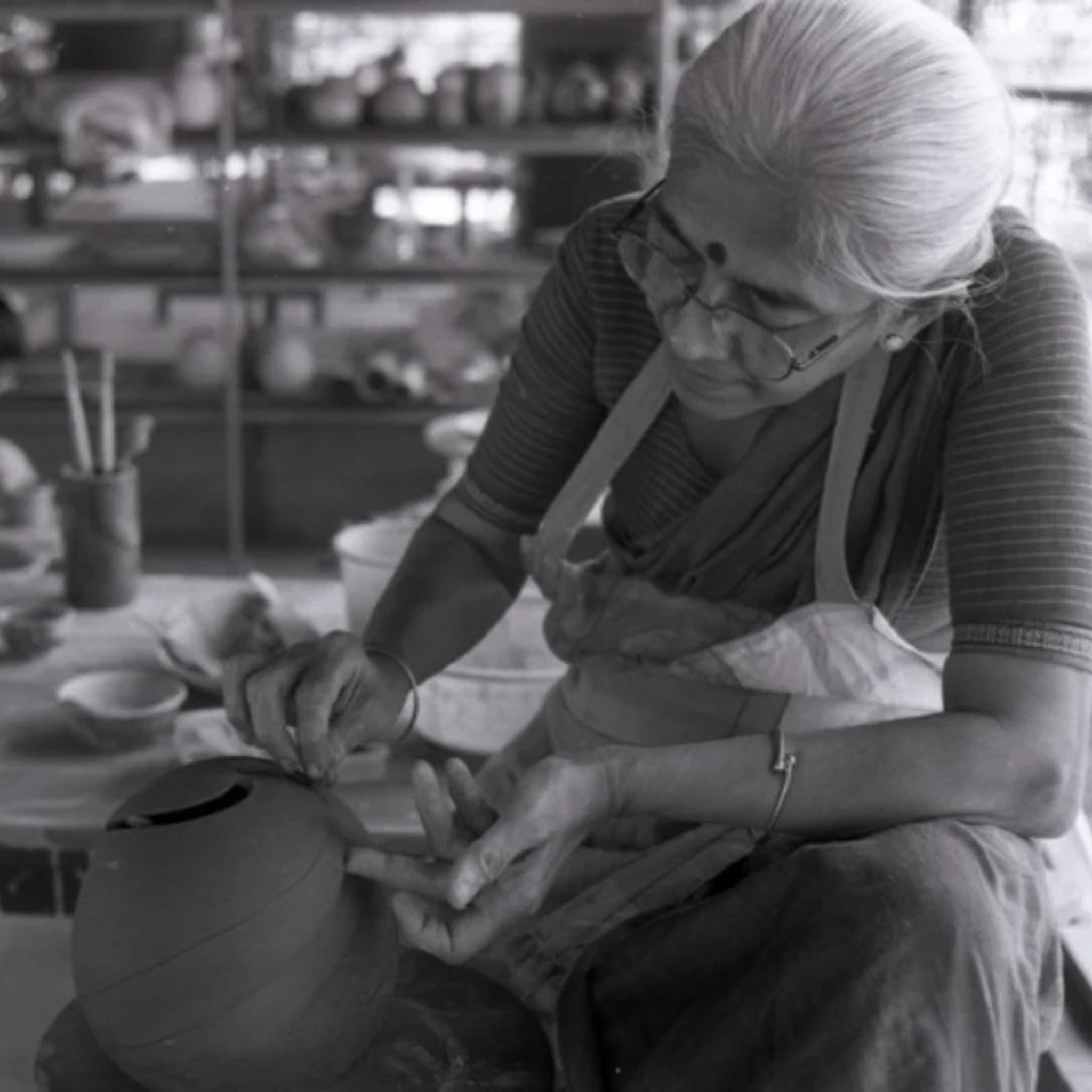
Jyotsna Bhatt was born in 1940 in Mandvi, Kutch. During her adolescence, she was encouraged by her uncle Kantisen shroff to pursue art and enrolled to study sculpture under the tutelage of Prof. Sankho Chaudhuri at the faculty of Fine Arts at Baroda’s MS University in 1958. Her exposure to ceramics as a sculpture student was where she found her true calling as an artist, leading her to evolve into one of India’s most reputed ceramicists. However, it was her time in New York with Prof.Jolyon Hofsteadat at the Brooklyn Museum Art School that impacted her profoundly, and which provided a direction to her art practice and fashioned her aesthetic sensibility more precisely.

In 1972, she chose to join her alma mater as a teacher and under her determined insistence and guidance created a vibrant environment of learning with in the ceramic studios at the faculty of Fine Arts. Extremely exacting herself, Jyotsna’s ceramic art was created from a sound comprehension of structural form. Her sculptural training allowed her to disassociate herself from the utilitarian concepts that often dog studio potters, and be simultaneously equally free of having to justify her artistic credentials to fit prevailing trends. She was in that sense unique. She celebrated her feminine spirit with unhindered abandon, always working small scale and caring to pay homage to the material of her choice — clay – the material she loved and worked solely with all her life. The plasticity this material offered allowed her to articulate the influences of nature and animal forms most exquisitely.

For those of us who were fortunate to be her students, and later shared a bond of friendship with her, watching her work on the wheel was like seeing a magician conjure from the sleight of hand an unexpected phenomenon of visual delight. Under her nimble fingers she would create geometric forms of spheres or cylinders that looked deceptively simple. These would then be deconstructed by cutting them and then reassembled to transform into other visual forms. She says of her own work that she would twist, tilt, stretch and push till the form visually satisfied her. These four simple words amass a universe of possibilities and articulate the vision of her creative philosophy so succinctly.

What pershapss is less written about is her understand feminist imprint a quiet legacy of everyday living the resomnates the principles of self-determination. A woman who lived her life belonging not by conventional means nor by extreme radical positions, but by the renegotiations within a patriarchal world where she stood unquestionably equal to all.

Jyotsna’s eyes were always arresting in their gaze, holding your self-accountability alert in her presence. Despite her rather frail and slight physical countenance, she possessed an inner strength that saw her work as an artist with disciplined rigour and unwavering belief in her practice. In a world of bling and razzmatazz, her art incorporated elements of subtle consideration, drawn from her own love of japanese pottery, where the glazed or wood-fired open-bodied sculptural or animal clay forms she created were to be lived with, in contemplation and personal reverie.

Her partnership with her husband Jyoti Bhatt, the renowned artist, photographer, print-maker and teacher was strong friendship that spanned fifty-five years of shared explorations and discoveries. Mother to her daughter Jai,Jyotsna showcased in all her relationships her wisdom to straddle life with no fuss or frills and embrace her reality at all times with infinite compassion, empathy and a healthy dose of humour as well.

Beloved to all her students and her countless admirers in the art world, this lady of dignity and fortitude can never be replaced. Just as Jyotsna took shapeless bits of clay and brought shape and form to them through her skill and knowledge, so too did she give shape and form to hundreds of her students who were always embraced by her patience and instilled with her grace of belief in them. Her untimely and sudden demise at her home in Vadodara leaves a palpable void for the art community who mourn the loss of this remarkable artist and teacher, whose quiet presence held so many lessons from which to imbibe. Perhaps her life truly is a testament of who she chose of the earth and to the earth returned.

The writer is a veteran artist based in Baroda.

From the Center: Of Creativity in the Clay of India

From the Center: Of Creativity in the Clay of India

Trupti Patel
Meru, Vadodara, 2010

Clay is a basic material, universally dug up and used in all cultures all over the world. It is so various and adantable that each culture and each succeeding generation finds in it a new means of expression. Countless cenerations of potters all over the world have bequeathed to us its knowledge in great complexity. Pots and shards have played a significant role in the historical and anthropological studies of how other peoples have lived.

The history of Terracotta in Indian culture is associated with the rising and flourishing of urban societies since the 6th century B. C. until the present. The hereditary craftsmen have practiced their calling in guilds according to their exigencies in local conditions making domestic wares, folk, votive and secular objects for daily use.

Abundance of natural red clay all over the country suitable for terracotta has produced wares not glazed, but burnished and painted with colored clay slips. The technique of open pit firing remains unchanged in India as glazing has not been part of the tradition. This may be largely due to practice in Hindu tradition where cups, bowls, containers and pots once used were usually thrown away returning to the earth and also provided continual work for the potters. The terracotta art is endowed with meaning that reflect the rich tradition of Indian symbolism suited to native religions, theology, rituals, literature, geography, sculpture, painting and continue to play an important role fill today.

Terracotta art traces a continuous trail of evolution since the Mohen-jo-Daro and Harappa cultures showing development in distinct forms and styles. The early Gupta period ca. Middle of 4th Century A.D. reveal tile and moulded brick works of very high artistic quality suggesting a new interest in wall decoration. The palaces and forts built by the Rajputs later between 8″-12th Centuries represented Hindu-Muslim style of architecture introducing for the first time coloured glaze tile work, made by Muslim artisans from Afghanistan. These are most notable in forts at Gwalior, Chittor, Mandu and Ranthambore. Subsequent Pathan Kings of the Sultanate Period built mosques and tombs decorated with plain blue colored and painted tiles from the 12-15th Century A.D. The work of Muslim potters in centers like Khurja, Multan, Lucknow, Kashmir, Delhi, Jaipur, Agra and other places popularised the use of low temperature glazed pottery with articles like, bottles, surahis, pickle jars, hukkas and tiles that continue to be made in places today.

Increasing European trade, interest and influence in India culminated in colonization by the British. They saw the need for development and education and established Madras School of Art in 1852, the first art Institution in India followed by other art schools like Government College of Art & Craft, Kolkota and Sir J.J. School of Art in Mumbai. Later, institutions in Lahore, Lucknow, Banaras and Delhi followed. The early art and craft centers had begun to serve such purpose as the Madras School of Art’s pottery section emphasising on terracotta art which is evident even today. The art courses offered a western training and approach to art as opposed to conventional practice of arts in traditional India. A new age in modern art practice was about to start.

Rabindranath Tagore, the Nobel Laureate, poet artist had set up Santiniketan- a school dedicated to the arts in 1906. Both, Mahatma Gandhi and Tagore had a vision of liberated human beings realised through educational approach based on creativity. In the early 1920s with the help of German pottery experts, Sriniketan was set up to encourage low temperature glazed earthenware for the benefit of local potters as well as students. Gandhiji had put into action satyagraha, his technique of nonviolent resistance. Devi Prasad, as a young student studying painting at Santiniketan in 1938, came in contact with Rabindranath Tagore and Gandhiji there during the freedom struggle of Indian independence. Their ideals of educational modernity involved indigenous models and methods better suited for native requirements in institutions both at Santiniketan and Gandhiji’s Nayee Talim at Sevagram. This encouraged Devi Prasad to work at Sevagram in Wardha from 1944. In 1950, he started a pottery workshop there and was later joined by Kalindi Jena, a gifted potter from Orissa.

In the early 20th Century, the British influence sought to produce ceramics in factories required for the expanding Colonial building work and development. Early commercial potteries for high fired ceramics were set up like the Gwalior Potteries in Delhi and Bengal Potteries in Kolkota producing colorful table ware, vases, jars and figurines which become very popular. Subsequently, high fired production units for industrial, electrical and sanitary emerged. New technological expertise required trained Indians to run such units. In 1919, Sardar Gurcharan Singh, a geologist, was sent to Japan for such training by Delhi Potteries which produced mainly bricks and tiles. Eventually his exposure to non industrial ceramics in Japan led him to set up the pioneering Delhi Blue Art Pottery in 1952.

Other ceramist-potters took interest in Modern ceramic practices and travelled to Britain, Europe, United States and Japan like Nirmala Patwardhan, who was trained at Aacademis der Kunste, Stuttgart under Professor Ulrich Gunther(1957) and Raymond Finch at Winchcome, Henry Hammond at Farnham and Bernard Leach at St. Ives, U.K. (1961-63) becoming India’s potter, glaze researcher and author. Primula Pandit, an early contemporary potter learnt from Gurcharan Singh in 1957, travelling to learn from Bernard Leach in St. Ives (1958), before going on scholarship to study under Maja Grotteeli at Cranbrook Academy of Art, Michigan, U.S.A. After returning to Mumbai she set up the Indian Studio Potters’ Association and held numerous workshops. Mansimran Singh worked as an apprentice with Bernard Leach in St. Ives in the 1960s and learnt from Geoffrey Whiting in the UK. On his return, he joined Sardar Gurcharan Singh, his father at the Delhi Blue Art Pottery which had become a major center for the training of potters and giving considerable encouragement to the pottery movement. Shree Krishnamuthy Mirmira, set up Rural Pottery Training Center at Bhadravati and worked with rural potters introducing glazing techniques using local clay at the Gramodaya Sangh in Maharastra. Mirmira too had gone to Japan a few times in the early 1960s. All of them encouraged, exposed and expanded scope of ceramic practice and technigues suited to evolving needs of aspiring students from different parts of India. Their approach to techniques, glazes and function of forms centered on the ideals of oriental functional combined with western methods and techniques.

Post independence era saw new vigour and enthusiasm to refurbish the old departments in existing institutions and centers as well as setting up new centers of excellence and facilities. The Pottery department at the Faculty of Fine Arts in Baroda was set up by Bashap Baruah in the late 1950s who had returned from his exposure of the progressive Stoke on Trent Potteries in Britain. He was assisted by Poona Khima, a traditional Potter. After Baruah’s brief stay, Kumud Patel, a young painter turned potter took charge. As opposed to her range of glazed functional ware, she made miniature pots exploring ideas of the pot. In the early 1970s Jyotsma Bhatt, joined the pottery department on her return from the U.S.A. Her interest in pottery as sculptural forms made by wheel thrown shapes developed into combined methods of making animals and birds. Then, Fine Arts pottery department offered non-collegiate certificate courses attracting a number of students to work and experiment with pots and glazes.

In 1967, Kalindi Jena headed the pottery department at the Banaras Hindu University and turned it into a major center of studio pottery. This school became synonymous with finely thrown and beautifully glazed stoneware showing influence of oriental brush work. Gharhi Studios were set up by the Lalit Kala in New Delhi by 1976 with well equipped studios and high firing kiln facilities. Ira Chaudhuri had already learnt pottery when she lived in Vadodara but started working with stoneware in Gharhi, creating her own decorative style using the sgraffito technique. Modernity of Indian explorations in ceramics depended upon availability of raw materials to make high temperature white clay bodies from different ceramic industries around the post independence art schools and centers. Coloring pigments, glaze materials and kiln techniques were procured from helpful industries and traders. As the ceramic industry advanced, the ceramists gained from increased possibilities of use in the medium.

Decades before studio pottery and ceramics gained desirable momentum, Sardar Gurcharan Singh had the first ever solo exhibition of studio pottery by an Indian artist in Mumbai (1954). Beautifully glazed stoneware articles were fired in his kiln and were priced modestly to encourage use in daily life. Over the period of time, an educated section of Indian society had begun to patronize indigenous arts and crafts including all kinds of mosaics and murals as can be seen in such works of Satish Gujaral and K. G. Subramanyan. Few Indian galleries started exhibiting work of modern potters. Later in the 1970s, ceramic as a specialised art evolved increasingly to include non functional and sculptural ceramics.

In the last quarter of 20th century, Indian ceramics expanded from the personal initiative of some artist potters and public as well as private patrons. Centers like Bharat Bhavan in Bhopal were set up in 1982. Mansimran and Mary Singh started the Andretta Pottery and craft society in Kangra, Himachal Pradesh making earthenware pottery in 1984. Golden Bridge Pottery was set up in Pondicherry by Deborah Smith and Ray Meeker in 1971 making stoneware tableware influencing resultant mushrooming of potteries in and around Auroville. Their commitment in teaching students since 1983 has made it a dynamic center in ceramics.

Brahmdeo Ram Pandit coming from a traditional potter family advanced from apprenticeship to new techniques in the Khadi and Village Industries’ Commission Pottery Trust Center in Bihar. He established his B.R. Pandit Studio Pottery in Bhayander near Mumbai since the 1970s and makes glazed bonsai trays, tiles and also exhibits pots in contemporary galleries.

In the last decade of the 20* Century a new support of patronage in ceramic making evolved. In the 19905 Ceramic Center in Vadodara as well as Sanskriti Foundation in New Delhi were set up augmenting crucial development of ceramics as an art form for the artists through various residencies, interactive workshops and camps.

In the new millennium, contemporary ceramics has metamorphosed from the early ideals of purely functional to variable ideas of non-function, decoration and sculptural expression suited to the contemporary voice.

Ideas of conventional craft and skill associated with ceramics and the restrictive nature of the material affecting scale has been broken as new ideas are expressed in multiples, assemblages, mixed media installations and objects. Growing awareness and understanding has extended possibilities for a burgeoning number of artists to experiment, explore and enjoy creative freedom. Increasing interest in ceramics as an art form in the urban visual culture should necessitate viewers, connoisseurs and public to appreciate its past legacy but applaud its legitimate contemporary contribution.

International Artists Camp

International Artists Camp

Followed by a group show

The Ceramic Center
Vadodara
2000

Led by Varsha Nair, this camp brought together artists from across the world and various disciplines to work at the Ceramic Center. Inspired by the materiality of clay, the natural surroundings of the Center and its juxtaposition with the industrial presence of the printing factory nearby, the artists created a range of works varying in scale and medium which were exhibited as the camp concluded.

National Ceramic Artists Camp

National Ceramic Artists Camp

The Ceramic Center
Vadodara
2001

This camp included senior artists in the Indian ceramic art world- Madhvi Subramanyam, Leena Batra, Trupti Patel, Shantanu Jena, Jayanti Naik, Ira Chaudhuri, Nirmala Patwardhan among others. Along with them, many students from the National Institute of Design and the MS University were welcomed as the policy was to be all inclusive at every step of the way. Young local artists such as Sukhdev Rathore, Nehal Rachh, Zaida Jacob, Panthini Thakkar, Vinod Daroz, Falguni Bhatt Sanghvi, Mudita Bhandari, Sanket Patel, Prithvi Raj Singh Deo and Foram Thakore took on administrative responsibilities alongside experimenting on their individual style.

From the Center: Exhibition of Ceramics

From the Center: Exhibition of Ceramics

Group of works made at the Ceramic Center
Gallery Art & Soul
Mumbai
2010

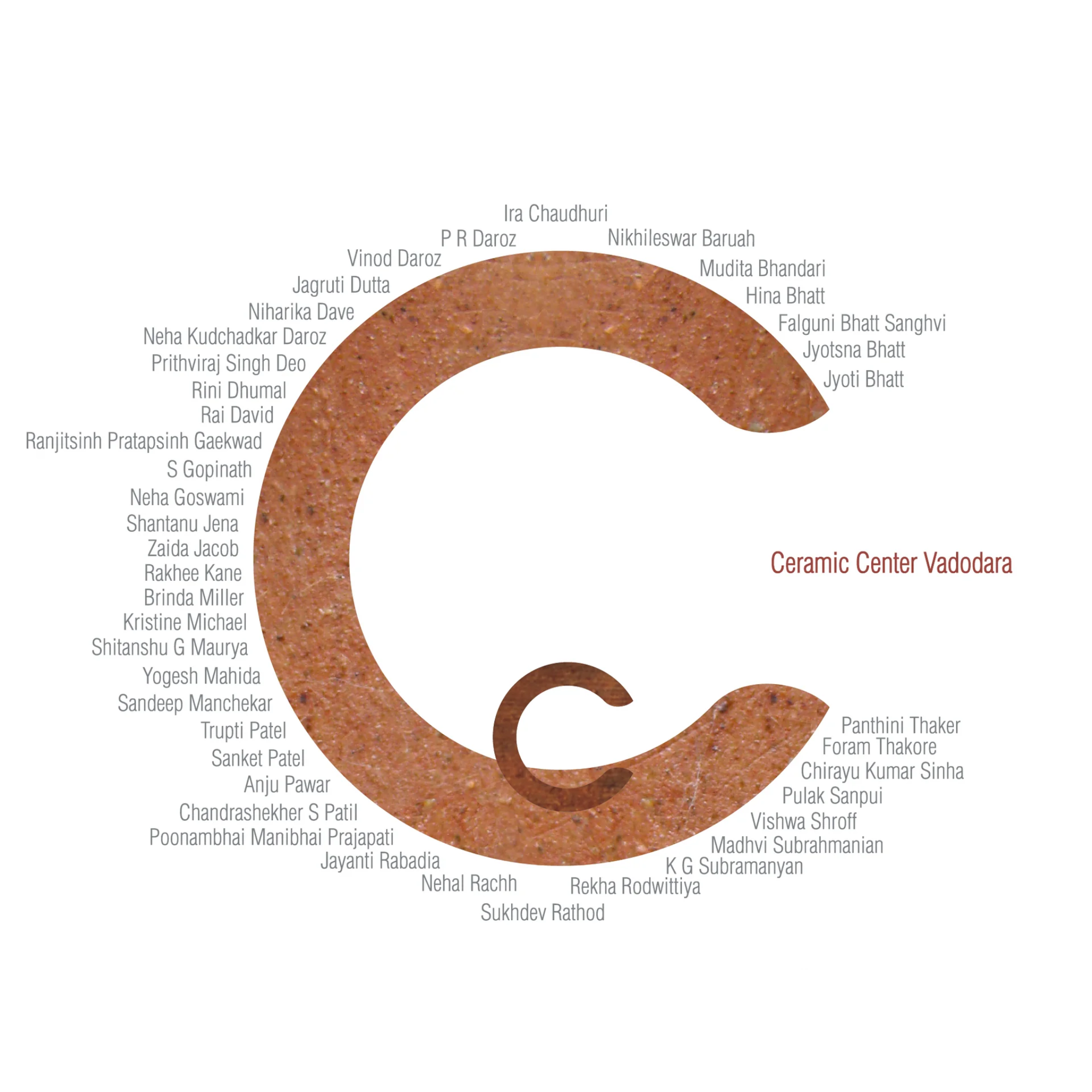
From the Center marked 12 years since the Center formally established. The show explored the Center’s role within the wider framework of creativity of clay, as well as the world of ceramic art and patronage, in India. This show celebrated the work of 42 artists who have created pieces at the Center.

It has long been the ethos of the Ceramic Center to lend support to ceramics as a creative medium and to provide a platform for ceramists and artists who are willing to experiment in this medium.

Since its inception over fourteen years ago, the Center has offered a conducive environment for budding, as well as, established artists and artisans; and it has been gratifying to see the energy and effort put into so much work of such high quality which has culminated in this proud endeavour bringing together some of the artists who have passed through its doors in this premier exhibition at Gallery Art & Soul Mumbai.

We appreciate the contribution of the artists and look forward to widening vistas through future projects. – The Ceramic Center, 2010

Ghadai: by the potters of Kutch

Ghadai: by the potters of Kutch

Khamir in collaboration with the Ceramic Center and Fondation d’entreprise Hermès
Bhuj, Vadodara and Mumbai
2015

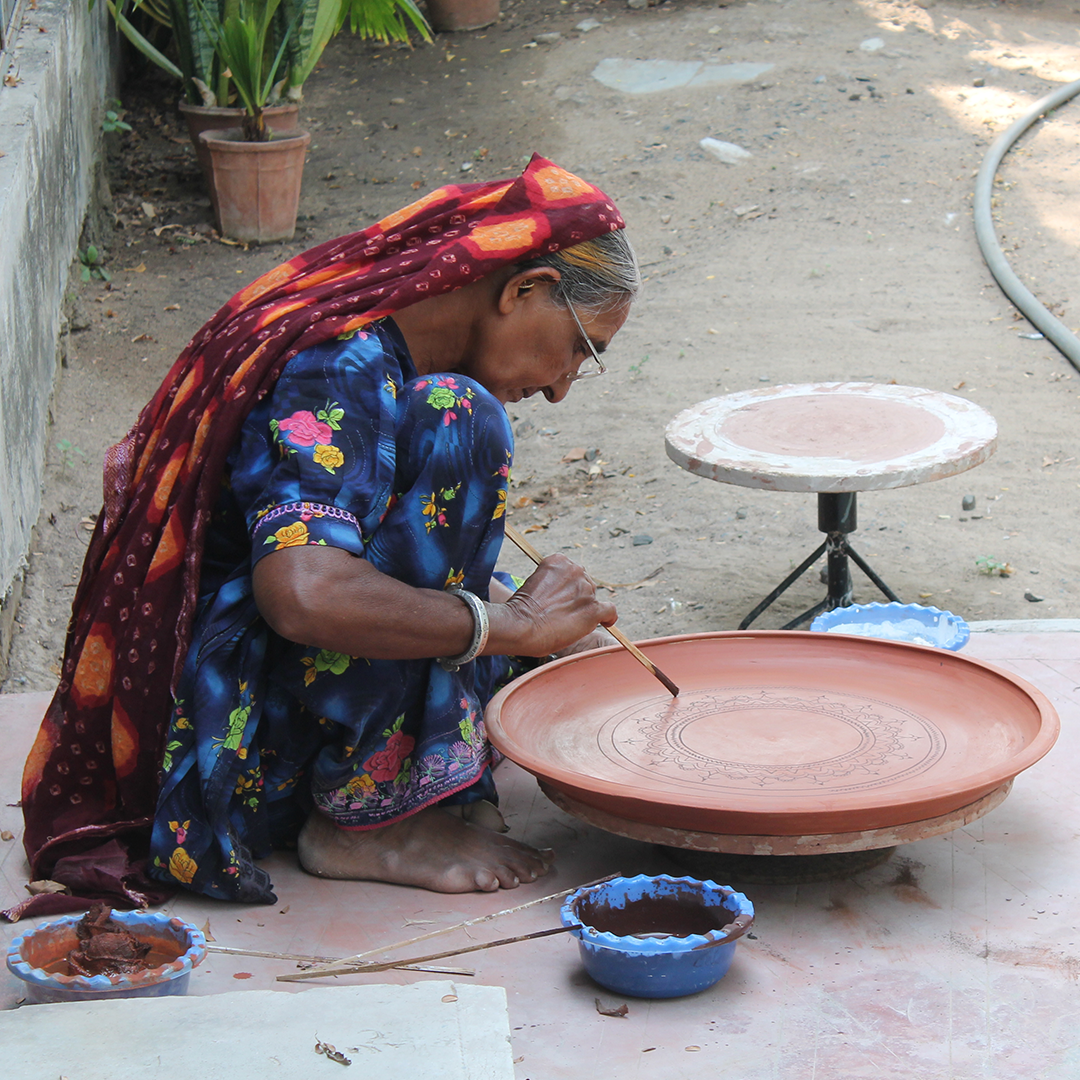
“Ghadai” is a pottery exhibition conceptualized by Kutch-based NGO Khamir, to showcase the handicraft of the Kumbhars, potters of Kutch. The exhibition traced the history of the Kutch potters, as well as present exceptional pottery pieces created especially for the project. The word “Ghadai” refers to the name of the unique and highly skilled technique used by traditional potters to create large objects of pottery. The project began with a tracing of the history of pottery in the Kutch region, where the team from Khamir travelled through different villages, talking, interacting and filming the artisans in order to be able to compile a comprehensive history of the craft. The final result is an exhibition that showcases the pottery of Kutch, its archaeology and 7000 year-old history and the social relevance of not just the craft but most importantly of the potter – known as the “prajapati”, lord of the people. Artists from the Ceramic Center visited the potters at Khamir in Kutch, where some of the displayed pieces were made. Some of the potters came to work with the artists at the Ceramic Center to recreate ancient terracotta vessels, as well as large scale and non-traditional pottery forms, decorated in their traditional motifs and colours. The pieces were exhibited in the Hermès showroom at Horniman Circle, Mumbai in February 2015.

Link to project video: https://youtu.be/uwyLEtng-_A

‘Chalo Kaam Kariye’: Remembering Jyotsna Bhatt

‘Chalo Kaam Kariye’: Remembering Jyotsna Bhatt

A ceramic art camp followed by a group show of ceramics
The Ceramic Center & The Distillery, Alembic Art District
Vadodara
2021

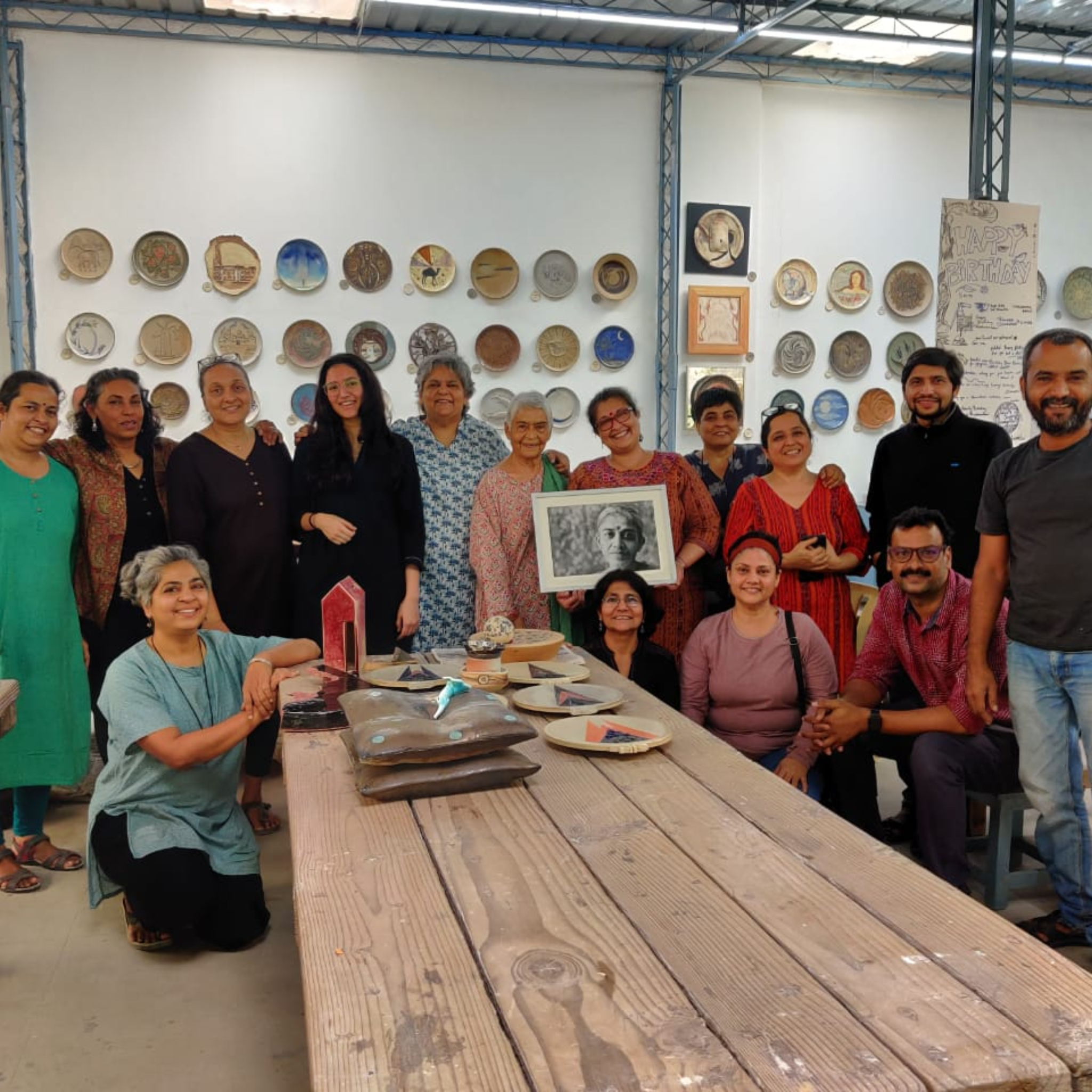
This exhibition was a culmination of a two-week ceramic workshop held at The Ceramic Centre in honour of Jyotsna Bhatt, with a hope to spread her light and spirit that she left within the community. The Ceramic Centre, which was her studio base for many years, has nurtured and guided emerging talent to support an ever-growing community of artists for nearly 25 years. The artists invited to participate in this exhibition have all trained under Jyotsnaben’s tutelage and share immensely personal and emotional connections with her. The works in this exhibition have been created with clays and glazes that Jyotsnaben herself used and shared with these artists. Starting this period of collective participation with the same “Chaalo Kaam Kariye!” energy that she embodied, each of the participating artists have created pieces that carry the spirit of Jyotsnaben with inspired memories, of incidents, training and cherished moments that translate into abstract forms and glazes of colour and clay.

This was the first of the Remembering Jyotsna Bhatt Ceramic Camps, led by Rakhee Kane.

Participating artists:
Anju Pawar
Devesh Upadhyay
Dipalee Daroz
Hina Bhatt
Kavita Pandya Ganguly
Khanjan Dalal
Neha Pattnayak
Nehal Rachh
P Daroz
Panthini Thaker
Rakhee Kane
Sanket Patel
Shampa Shah
Sukhdev Rathod
Vinod Daroz
Zaida Jacob

Heartfulness Pottery

Heartfulness Pottery

Knowledge-sharing and development seminar
The Ceramic Center & Heartfulness Institute
Kanha Shantivanam, Hyderabad
2022-23

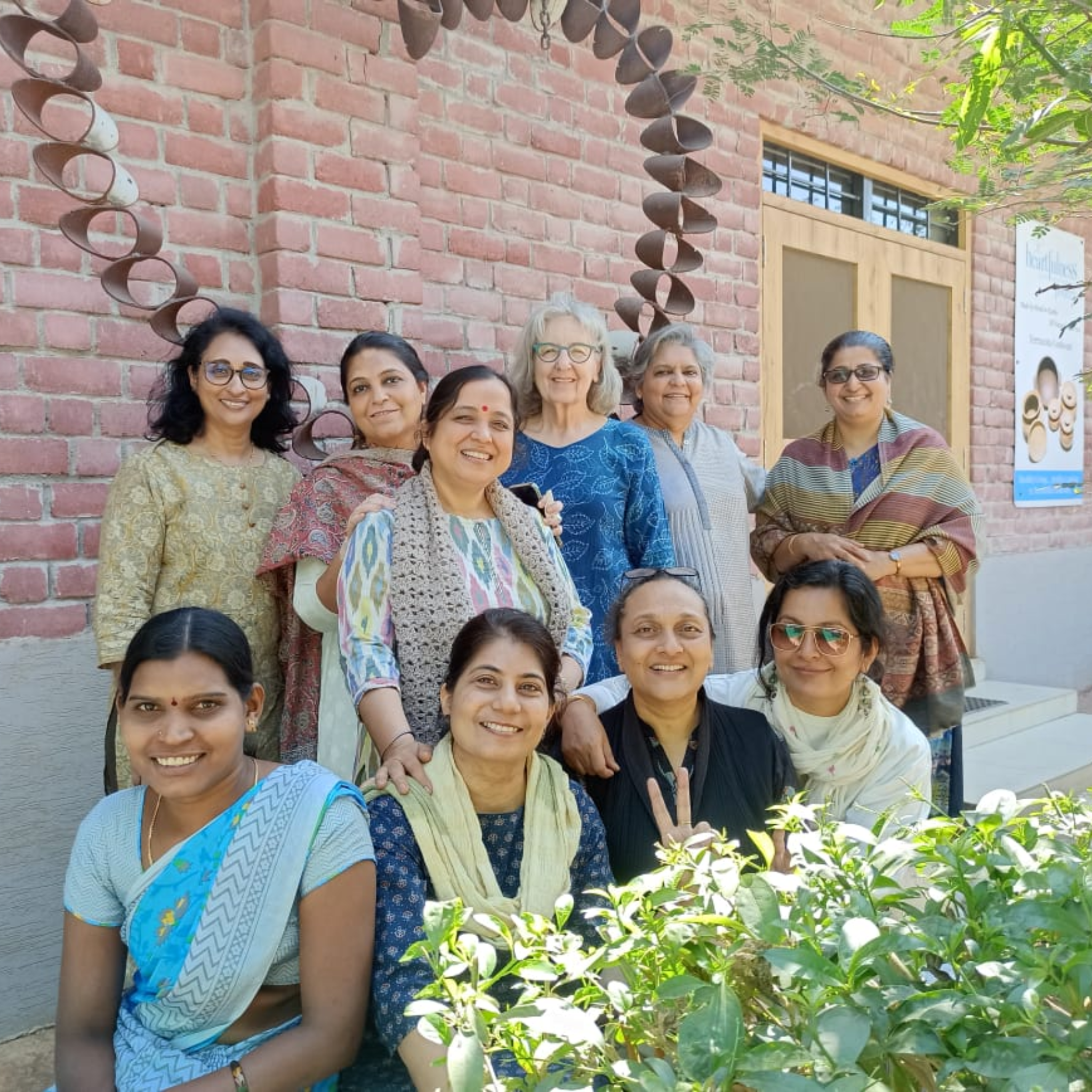
Artists from the Center visited Kanha Shantivanam in December 2022 to interact with the potters, artists and staff running the Heartfulness pottery studio. The team discussed plans for expanding the studio, improving production and infrastructure, developing new programmes for training, learning and growth, and future collaborations and workshops. The partnership has extended to multiple visits dedicated to resource-sharing and training sessions.

Nikhileshwar Baruah

Nikhileshwar Baruah

A former student and faculty member of the Faculty of Fine Arts, MSU in Baroda, Nikhileshwar Baruah’s artistic journey has been deeply rooted in Vadodara’s rich cultural heritage. He worked for many years at the Ceramic Center, where he also participated in programs such as the Center’s collaboration with Khamir and its initiative with potters from Kutch. Baruah’s artistic expressions span various mediums, and he continues to represent the creative potential of artists from the Northeast and create opportunities for their recognition.